

The Hidden Risks of Wearables
Hey there, friend. We need to have a heart-to-heart about those shiny gadgets we wear on our wrists or clip to our belts.
In today’s world, it seems like everyone has a smartwatch, a fitness tracker, or a pair of high-tech earbuds. They’re marketed as tools for wellness, counting our steps, monitoring our sleep, and even keeping us connected to our loved ones. On the surface, they’re symbols of a healthy, organized life. But for those of us navigating high-conflict relationships or trying to heal from domestic violence, these convenient devices can carry hidden risks that aren’t mentioned in the user manual.
At Blooming Lilies, we believe that knowledge is your greatest superpower. When you understand how technology can be used against you, you can take proactive steps to reclaim your privacy and your peace of mind. Let’s dive into the "dark side" of wearables and how you can stay safe while still enjoying the benefits of modern tech.
When "Connected" Becomes "Tracked"
The biggest risk with wearables isn’t just about the data they collect, it’s who has access to that data. Most smartwatches and fitness trackers are synced to a smartphone and a cloud account. If an abusive partner or a high-conflict ex has your login credentials (or if you’re on a shared family plan), they can see exactly where you are in real-time.
This isn’t just a privacy glitch; it’s a tool for stalking. Whether it’s an Apple Watch, a Fitbit, or even a hidden GPS tile tucked into a bag, these devices can tell someone your exact location, how long you stayed there, and even what your heart rate was while you were there.
If you’re currently in the process of leaving or have already left a dangerous situation, your physical location is your most sensitive information. This is why we always recommend including a "tech audit" in your safety plan. If you’re preparing for a big move, our Blooming Lilies Relocation Planner is designed to help you organize all these moving parts, including the digital ones, so you can transition to safety with confidence.

The Privacy Paradox: Where Does Your Data Go?
It’s easy to think of our health data as private, like a conversation with a doctor. However, research shows that many wearables lack rigorous validation and high-level security. In fact, security researchers have demonstrated that some medical wearables can be remotely manipulated. While that sounds like something out of a sci-fi movie, the more common risk is a privacy breach.
Sensitive health information, like your sleep patterns, menstrual cycles, and stress levels, is often stored on servers that can be vulnerable to hacking. Even worse, some companies sell this data to third-party corporations without your explicit consent.
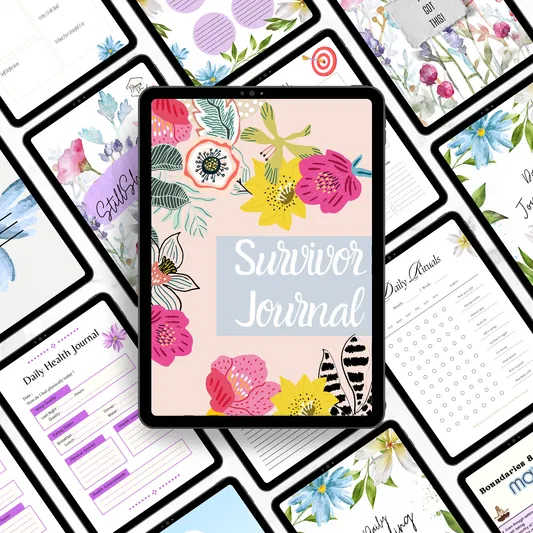
For a survivor, this data is deeply personal. It reflects your physical and emotional state. When you are working through trauma, you deserve to have your boundaries respected, both in person and digitally. If you’re looking for a safe, offline space to process these feelings without the risk of a data breach, our Blooming Lilies Survivor Journal offers a tangible, private way to document your journey and find your voice again.
Psychological Harm and the "Anxiety Loop"
There’s another hidden risk of wearables that doesn’t get enough attention: the psychological impact. Research published in the Journal of the American Heart Association found that people using wearables to monitor conditions like Afib often experienced higher levels of anxiety.
When you’re a survivor of domestic violence or narcissistic abuse, your nervous system is already on high alert. You might already be struggling with hyper-vigilance, that feeling of constantly looking over your shoulder. Constant notifications from a wearable about your heart rate or "stress levels" can actually trigger a trauma response. Instead of helping you "relax," the device might keep you trapped in a loop of health preoccupation and fear.
It is so important to listen to your body directly rather than relying on a screen to tell you how you feel. We often suggest using tools like the PTSD & Trauma Processing Workbook to help you reconnect with your body’s natural signals in a supportive, trauma-informed way.

Technology-Facilitated Abuse: Red Flags to Watch For
Technology-facilitated abuse is a fancy term for a very scary reality: using tech to control, harass, or intimidate someone. Here are a few red flags that your wearable or other tech might be compromised:
- Unexplained "Gifts": An abusive partner insists on buying you a specific smartwatch and insists on "setting it up" for you.
- Location Check-ins: They seem to know where you are even when you haven't told them, or they question why your "heart rate was up" at a specific time of day.
- Battery Drain: Your device's battery is dying much faster than usual, which can sometimes indicate that tracking software is running constantly in the background.
- Linked Accounts: You are required to share your password or stay on a "Family Sharing" plan where your location is permanently visible.
If any of these sound familiar, please know that you aren't "crazy" or "paranoid." Trust your gut. If a device makes you feel watched rather than empowered, it’s okay to take it off.
Creating a Digital Safety Plan
Reclaiming your digital space is a huge part of reclaiming your life. Here are a few practical steps you can take today to make your wearables safer:
- Audit Your Accounts: Change the passwords to any accounts linked to your wearable (Apple ID, Google, Fitbit, etc.). Use a password manager and enable two-factor authentication with an app, not just a text message.
- Check Location Permissions: Go into your phone settings and see which apps have access to your location. For wearables, disable "Always Allow" location access unless it's absolutely necessary.
- Disable "Find My" Sharing: While "Find My" features are great for lost watches, they can be used to track people. Ensure you aren't sharing your location with anyone you don't explicitly trust.
- Factory Reset: If you suspect a device is compromised, perform a factory reset. This can often clear out unauthorized tracking settings.
- Go Analog: Sometimes, the safest way to track your wellness is with pen and paper. Using a Self-Care Planner allows you to monitor your habits and moods without leaving a digital footprint for someone else to find.
Empowerment Over Surveillance
Technology should be a tool that serves you, not a leash used by someone else. You have the right to move through the world without being monitored. You have the right to your own data, your own health information, and your own peace of mind.
If you are feeling overwhelmed by the technical side of safety, take a deep breath. You don't have to do this all at once. Start with one device, one password, or one setting. Every step you take toward digital privacy is a step toward freedom.
Healing from abuse is a journey of many small victories. Whether you're working through the Narcissistic Healing Journal to understand what you've been through, or using our Budget Tracker Bundle to build a financial foundation for your new life, remember that you are the one in the driver's seat.
You Are Not Alone
At Blooming Lilies, we see your courage. We know that navigating the complexities of modern stalking and technology-facilitated abuse is exhausting. But we also know how resilient you are. By staying informed and taking control of your tech, you are sending a powerful message that your life belongs to you.
If you’re looking for more ways to support your mental wellness and safety, we invite you to explore our collection of free resources. From safety planning tips to grounding exercises, we’re here to walk alongside you every step of the way.
You deserve to feel safe. You deserve to be free. And you are doing an amazing job getting there.
Take the first step toward a safer digital life today. Whether it’s updating a password or starting a new safety plan, your future self will thank you for the boundaries you set now.
Explore our full range of trauma-informed resources at Blooming Lilies.